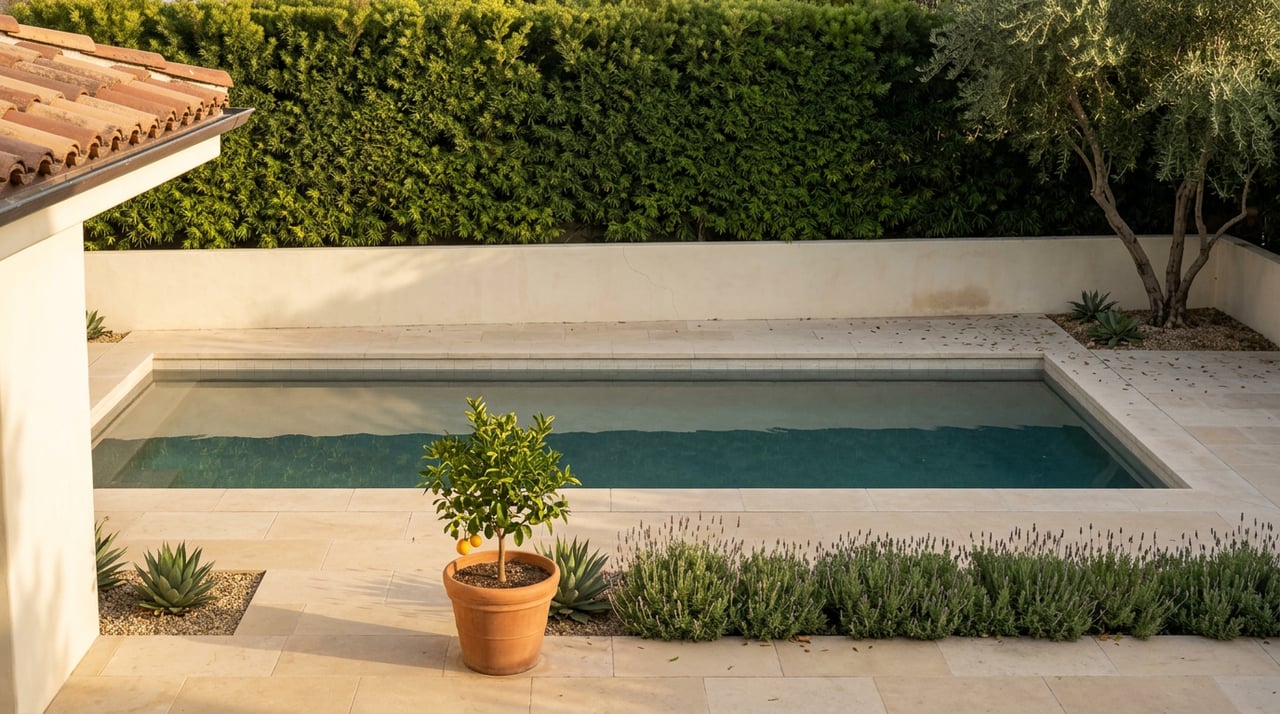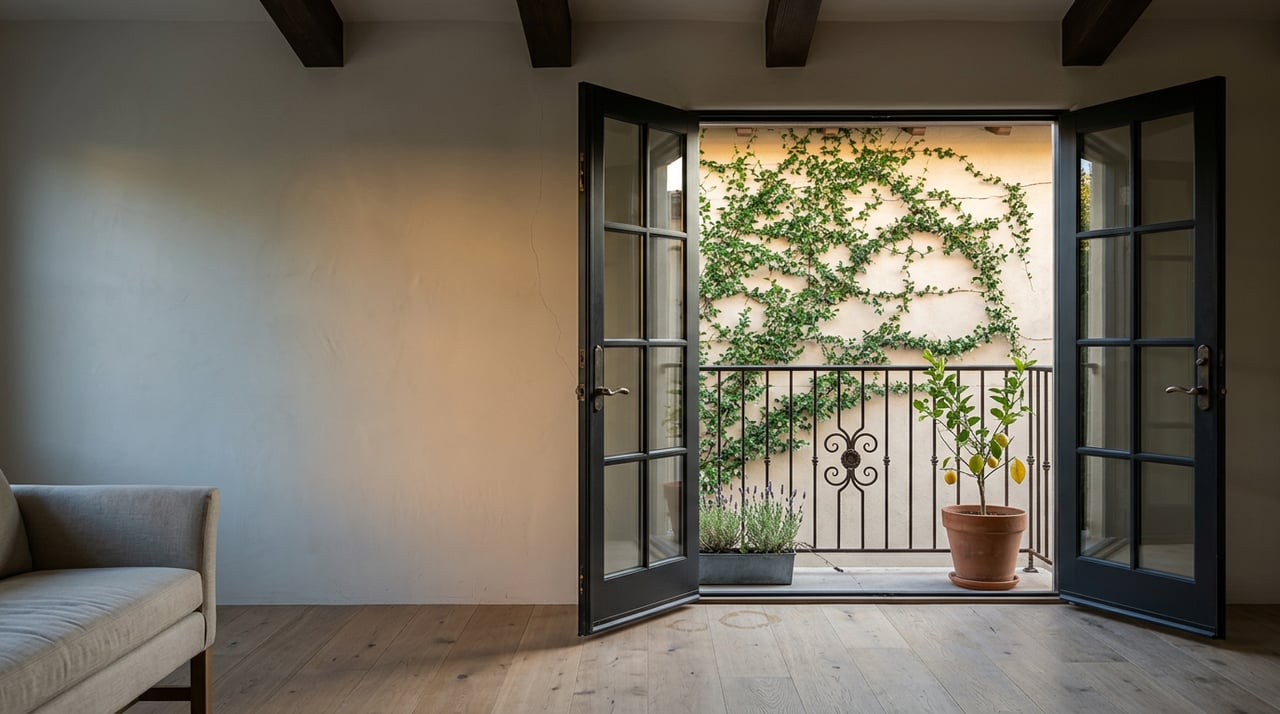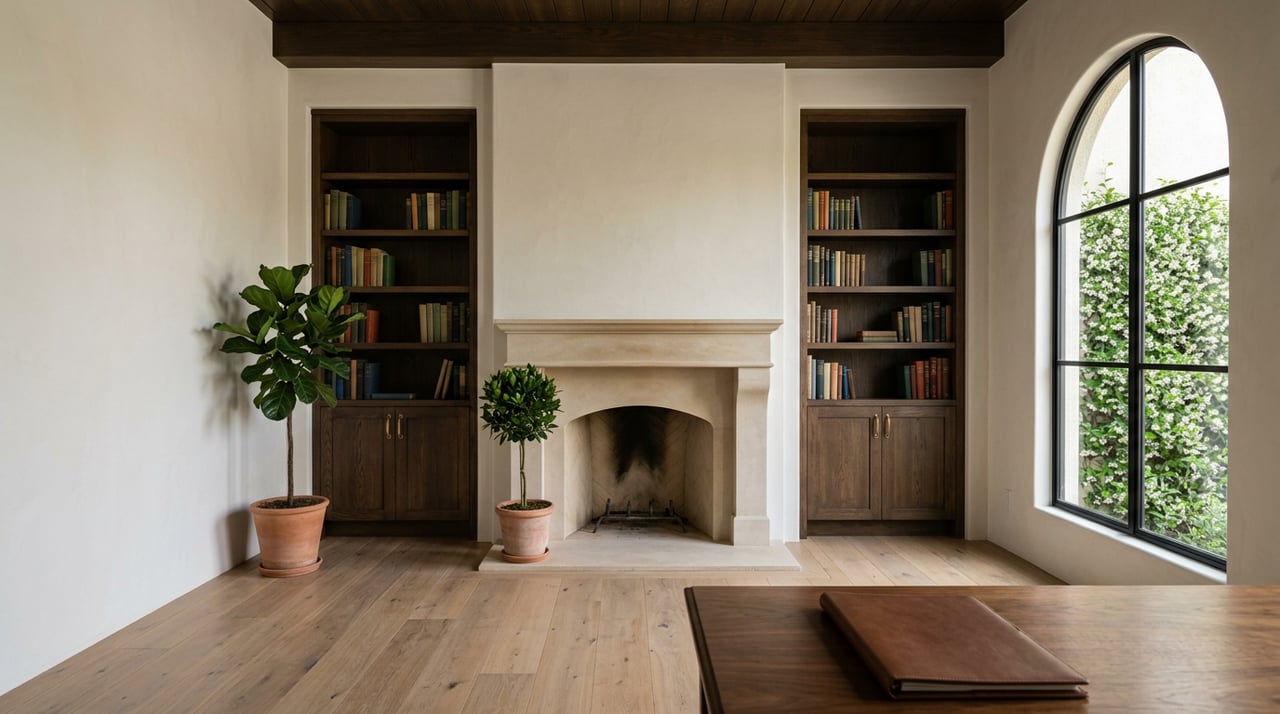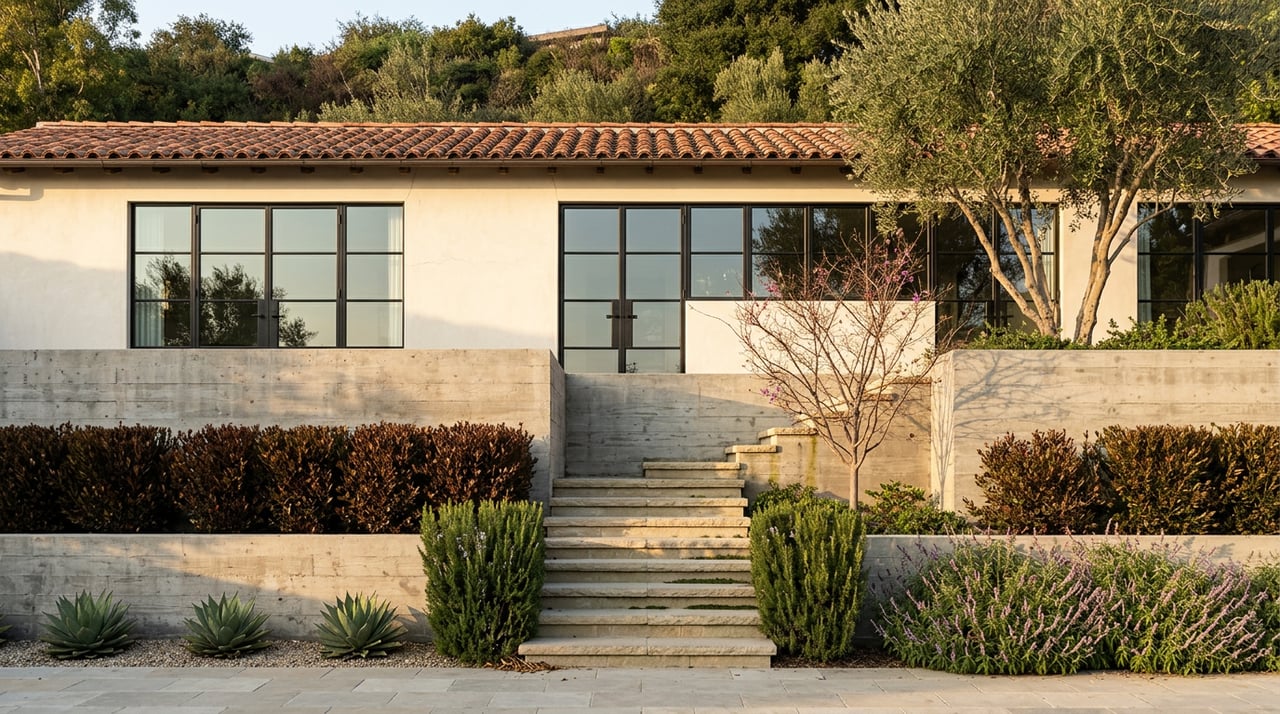
In February 2023, a 1938 house at 12309 Viewcrest Road in Studio City sold for $5,050,000, or roughly $464 a square foot. Three years and one gut renovation later, the same address came back on the market in April 2026 asking $28,000,000, a jump of 454.5% on the same lot. Nothing changed about the address. Nothing changed about the zip code. The house changed.
That gap is worth sitting with before anyone reaches for a citywide median. Buyers who search "Studio City home prices" tend to land on one number and treat it as a floor or a ceiling. It is neither. It's an average pulled across at least five distinct pockets of the neighborhood, each behaving like its own small economy, and the biggest single driver of where a specific house lands in that range has less to do with which pocket it sits in than with what has actually been done to it.
The median that keeps changing its mind
Ask three sources what a Studio City home costs right now and you'll get three defensible, contradictory answers. Trailing three months through July 2026, one widely used portal put the median sale price at $1.81 million, down 5.6% from the year before, with price per square foot at $802. A local brokerage's Q1 2026 report put the median at $1.93 million, up 18.5% year over year, over the same broad market. A market update compiled in early July 2026 showed a single-month median of just $1.36 million, down about 19% year over year, and was careful to frame that swing as noise rather than a shift, advising readers to read the trend "as direction rather than decimals."
The explanation isn't that the market is erratic. It's that Studio City closes only about 20 to 25 homes a month, so the specific mix of properties that happen to sell in any given window can swing the median by hundreds of thousands of dollars without a single underlying home losing value. The steadier signal, and the one where multiple 2026 reports actually agree, is price per square foot, which has held in the high $700s to low $800s across several independent sources even as the headline median bounced.
That distinction matters for anyone comparing Studio City to a neighboring market on price alone. The number that looks most stable often isn't the number making headlines.
Same zip code, five different economies
Beneath that noisy median sits a set of pockets that don't behave like one market at all.
| General location | 2026 pricing signal | What buyers are actually paying for | |
|---|---|---|---|
| The flats (Colfax Meadows, Beeman Park, Woodbridge Park) | North of Ventura Boulevard toward Moorpark Street | Roughly $700 to $900 per square foot for single-family homes | Yard usability, single-level living, walkable errands |
| Silver Triangle | South of Ventura Boulevard, at the base of the hills near Laurel Canyon | Median list price near $3.4 million, average around $1,611 per square foot in a late May 2026 snapshot of eight active listings | Proximity to the Ventura and Laurel Canyon corridor |
| Fryman Canyon and Wrightwood Estates | Hillside, canyon-adjacent | Regularly exceeds $5 million for renovated or view properties | Privacy, canyon and valley views, architectural design |
| The design ceiling | Wherever a full architectural rebuild happens | $2,573 per square foot on the April 2026 Viewcrest Road ask | A structure rebuilt as an architectural statement, not just refreshed |
Read that Silver Triangle figure as a snapshot, not a rule. Eight active listings is a small enough sample that one closing can move the average meaningfully, which is its own small lesson in why pocket-level numbers deserve the same skepticism as the citywide median.
What the table doesn't show is prestige. It shows typology. A comparison of Wrightwood Estates against Colfax Meadows found that hillside properties with compelling views and architectural updates can command higher prices per square foot than original-condition homes on the flats, but newly rebuilt houses lift the average in both places, which means comp selection has to be surgical rather than geographic. In plain terms, a renovated Colfax Meadows house can out-price an unrenovated Wrightwood one. The pocket sets a range. The house decides where in that range it lands.
What actually happened at Viewcrest Road
The Viewcrest house is the cleanest illustration of that principle available in the current market.
Before the renovation, the property spent years failing to find real traction. It was listed at $6,495,000 in November 2017, cut to $6,250,000 by February 2018, cut again to $5,799,000 in April 2018, and finally expired that August without a sale. Relisted at $5,750,000 in December 2022, it sold the following February for $5,050,000. One account of the property at that stage described it plainly as a modest older home with poor flow, citing "a roofline that worked against the topography."
What followed was a full reimagining rather than a refresh. Writer-producer Doug Prochilo developed the compound with architect Adrian Koffka of Koffka/Phakos Design and landscape architect Ross Woodley of EPT Design, expanding the house to seven bedrooms and eleven bathrooms across three levels. The project was reengineered mid-construction for fire resilience following the January 2025 fires, a detail that matters in a hillside market where insurance and rebuild costs are increasingly part of the buyer conversation. It returned to market in April 2026 at $28,000,000, or $2,573 per square foot on its 10,883 listed square feet, a 454.5% increase over the 2023 sale price on the identical parcel.
No pocket premium explains that swing. The lot didn't move. The zip code didn't change. What changed was the architecture, and the market paid for it accordingly.
The lever most buyers overlook
Viewcrest sits at the far edge of what design-driven rebuilding can do, but the underlying mechanism scales down to ordinary transactions across every pocket in Studio City. Within a single pocket, the spread between an original-condition house and a thoughtfully renovated one is often wider than the spread between two neighboring pockets. That means the question worth asking isn't "which pocket is worth more," it's "what specifically was done to this house, and did it solve the site's actual limitations or just dress around them."
A few questions separate the two:
- What structural work happened, not just what was finished. Foundation, framing, and drainage decide whether the price reflects a rebuilt house or a repainted one.
- Whether fire hardening was addressed as part of the renovation, a consideration that's become more common in Studio City hillside projects since the January 2025 fires.
- Whether the site's original limitations, like Viewcrest's roofline and topography mismatch, were actually resolved or simply built around.
- How closed comps in that specific pocket, not the citywide median, priced similar scopes of work.
That last point is where a former builder's read on a listing differs from a portal's. A staged kitchen and a structurally reworked one can look identical in photographs and land in entirely different price bands once a knowledgeable eye separates cosmetic finish from real intervention.
Three questions worth asking before you trust a Studio City comp
Does a Silver Triangle address guarantee a higher price than a similar house in Colfax Meadows? Not automatically. The small sample size behind the Silver Triangle average, eight active listings as of late May 2026, means that figure can shift with a single closing. Condition and the specific work done to a house tend to matter as much as the pocket name on the listing.
Will every hillside renovation see Viewcrest-style returns? No. Viewcrest represents the outer edge of what design-driven rebuilding can achieve, not a typical outcome. The broader pattern from comparisons of Wrightwood Estates and Colfax Meadows is that renovated hillside homes tend to command a premium over original-condition flats homes, but that premium is a range, not a guarantee.
What should I actually compare when pricing a Studio City home? A specific pocket, a specific condition tier, and a specific type of structural work, not the citywide median. A three-month trailing median can move by hundreds of thousands of dollars simply because of which 20 to 25 homes happened to close that quarter.
Studio City rewards buyers and sellers who read past the headline number. If you're weighing a purchase or a sale here and want a comp sheet that accounts for what's actually inside the walls, not just the pocket on the map, Joan Duffy brings a former builder's eye to exactly this kind of read.