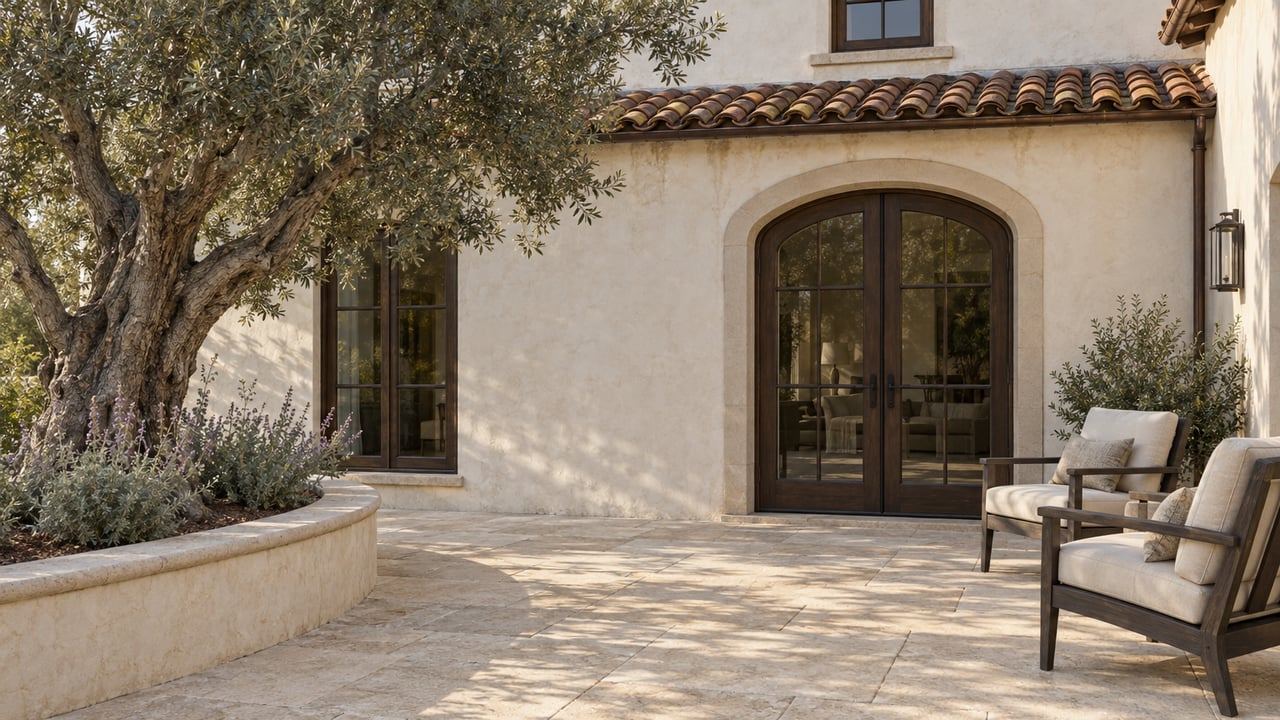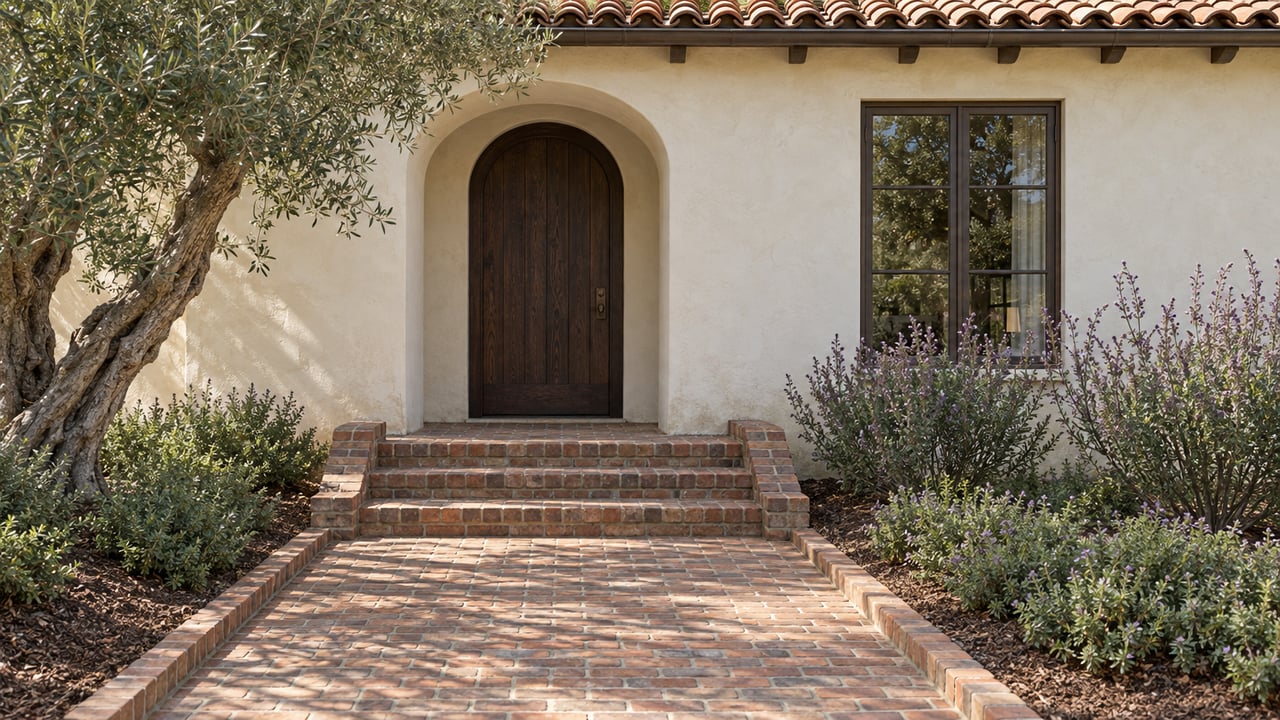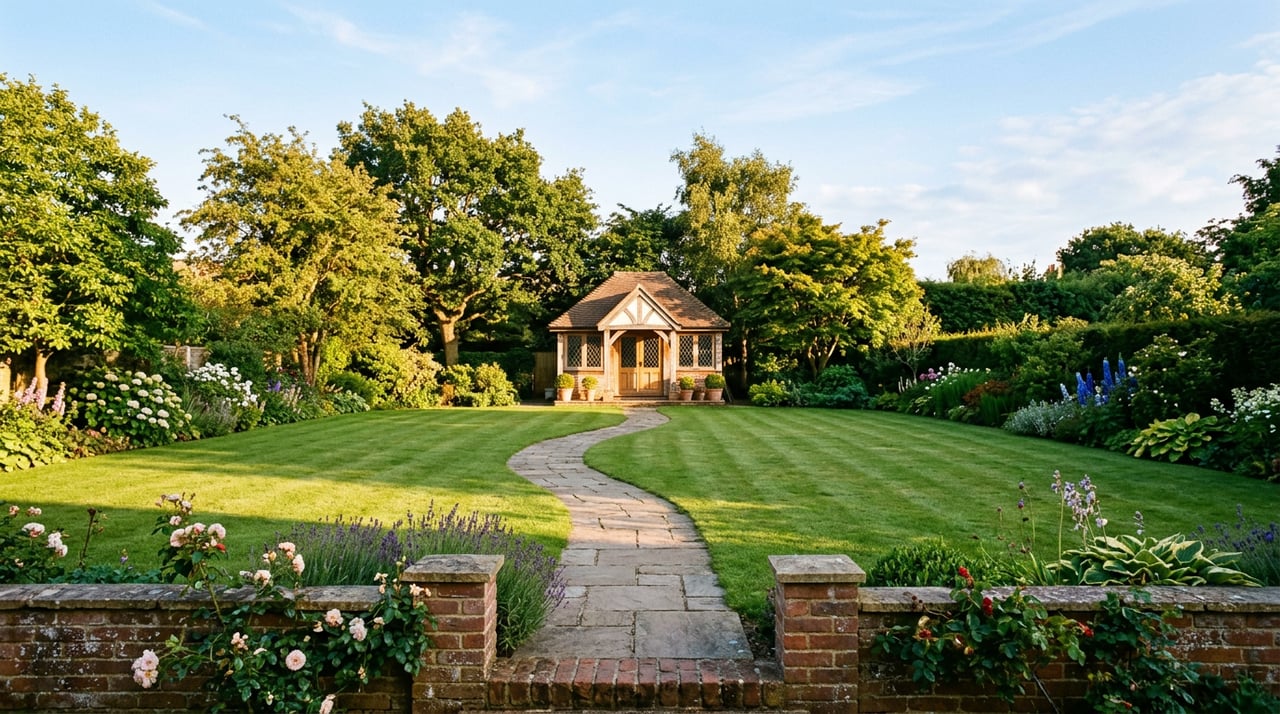
Two lots. Both a little over 7,500 square feet, which is the size you'll see quoted again and again as the Encino standard. Both flat enough to build on without engineering surprises. One sits north of Ventura Boulevard on a tract street. The other sits south, on one of the wider parcels that make up Encino's older estate fabric. On paper, in a flyer, in an automated valuation summary, they read the same. In practice, what each one can actually carry in guest house or ADU square footage depends on a set of overlays that never show up in the listing photos.
This is the detail that gets flattened every time "big lot, ADU potential" gets used as a selling point. Lot size is the input everyone quotes because it's the easiest number to find. It is not the number that decides what you can build.
The Zoning Ordinance Sits on Top of State Law, Not Instead of It
Every Encino ADU permit runs through the Los Angeles Department of Building and Safety under the city's ADU ordinance, LAMC § 12.22.A.33, which itself sits on top of California's statewide ADU law under Government Code §§ 66310 through 66342. The same city ordinance covers Sherman Oaks across the 405 and Tarzana across Lindley. What changes from block to block within Encino isn't the ordinance. It's the overlay map layered on top of it, and the lot underneath.
That overlay map is where the actual math lives: whether the parcel falls inside a Hillside Area, whether it sits in a Very High Fire Hazard Severity Zone, and whether it qualifies for a parking exemption tied to public transit access. None of those three things can be read off a listing sheet. They have to be checked, parcel by parcel, before anyone prices in ADU value.
The Exemption You Can't Assume From the Address
Many Encino lots along the Ventura corridor qualify for a parking exemption under Government Code § 66322: if a property sits within a half mile of public transit, the city can't require an off-street parking space for the ADU. That's a real cost difference, because a parking requirement can mean sacrificing yard space or reworking a driveway to accommodate it.
The catch is that "along the corridor" is not the same as "confirmed." The exemption is verified per lot in ZIMAS, the city's zoning information map system, not assumed from a street address or a general sense of proximity to Ventura Boulevard. Two lots on the same block can land on different sides of that half-mile line.
Before anyone treats a parking exemption as a given, the sequence looks like this:
- Pull the parcel in ZIMAS and confirm the transit-proximity flag directly, rather than estimating distance from a map.
- Cross-check whether the parcel also falls inside a Hillside Area or a Very High Fire Hazard Severity Zone, since either one adds its own requirements regardless of the parking exemption.
- Confirm the height limit that applies under the zoning district, since that ceiling governs how much of the ADU ordinance's two-story allowance a given lot can actually use.
- Get the read in writing or in a screenshot from ZIMAS itself, not as a verbal assurance from anyone involved in the transaction.
Skipping that sequence is how a buyer ends up paying a premium for "ADU potential" that a parking requirement quietly erodes.
When a Hillside Lot Costs More to Build
A lot that falls inside both a Hillside Area and a Very High Fire Hazard Severity Zone carries its own added requirements under LAMC § 12.22.A.33: fire sprinklers, at least one off-street parking space regardless of transit proximity, and twenty feet of roadway frontage. Those three requirements can stack directly against the transit parking exemption described above. A hillside parcel near Ventura might get the parking break on paper and still need the space anyway once the fire zone overlay applies.
This is the kind of detail that separates a genuine cost estimate from a hopeful one. A flat lot south of Ventura without hillside or fire zone overlays and a hillside lot with a view, both quoted at similar square footage, are not comparable ADU projects. The flat lot's guest house is a permitting question. The hillside lot's guest house is a permitting question plus a fire-hardening and access question, and that difference belongs in any conversation about price.
North of Ventura, South of Ventura
The overlay differences track a real historical pattern in how Encino was built out, which is worth naming directly rather than treating as incidental.
| North of Ventura (typical tract lots) | South of Ventura (estate corridor) | |
|---|---|---|
| Common lot character | Smaller, more uniform tract parcels | Larger parcels, often 7,500+ sq ft and up |
| Guest house tradition | Less common historically | Long-standing tradition of guest houses on the larger estate parcels |
| Overlay exposure | More likely flat, fewer hillside overlays | More likely to intersect Hillside Area and fire zone overlays depending on exact location |
| ADU framing | Often a straightforward addition on a standard lot | Often reads as restoring or formalizing an existing guest house tradition, but needs the same overlay check |
The wider parcels south of Ventura Boulevard have long been where Encino's guest houses actually got built, which is part of why buyers in that corridor often expect ADU potential as a baseline feature rather than a bonus. That expectation is reasonable as a starting point. It is not a substitute for the ZIMAS check, because the same estate corridor is also where hillside and fire zone overlays are more likely to apply.
The Clock the City Actually Has to Keep
ADU review in Los Angeles is ministerial, meaning LADBS checks the plans against the code directly, with no public hearing and no neighbor sign-off required. Once an application is complete, the city has 60 days to approve or deny it under Government Code § 66317. Miss that window, and the application is deemed approved.
As of January 1, 2026, a new requirement under SB 543 adds a second, earlier checkpoint: the city must confirm in writing whether an application is complete within 15 business days of submission. For a buyer or seller trying to gauge how quickly ADU plans could move once a sale closes, that two-step clock, 15 business days for a completeness read and 60 days for a final decision, is a real planning number, not a vague "it depends on the city."
What a New Encino ADU Can Be, and What It Can't
One detail that surprises people who are building an ADU with rental income in mind: Los Angeles's Home-Sharing Ordinance No. 185,931 limits short-term rental registration to a host's primary residence, and ADUs permitted after January 1, 2017 aren't eligible for that registration. A new Encino ADU is, by design, a long-term rental product, not a short-term one.
That's not necessarily a downside. HUD's FY2026 Fair Market Rents for the Los Angeles-Long Beach-Glendale metro set a conservative floor of $2,085 for a one-bedroom and $2,601 for a two-bedroom, and those figures include decades-old apartment stock across the whole metro area, not premium new construction in a specific neighborhood. A new detached unit in Encino, close to Encino Hospital Medical Center and the Ventura corridor, should be expected to rent above that metro-wide floor. The number is useful precisely because it's conservative, not because it's a ceiling.
A Separate Question Worth Not Confusing With This One
None of the above touches SB 9 lot splits, which is a genuinely different and currently unsettled question in the City of Los Angeles specifically. Malibu and Pasadena recently settled a lawsuit that required them to repeal local bans on SB 9 lot splits in fire-affected areas, but the City of Los Angeles and Los Angeles County are still litigating the same case, with no announced ruling date. Whatever eventually happens with SB 9 lot splits inside the city, it's a separate legal track from standard ADU law, which is settled and already in active use. Anyone comparing an Encino property's "ADU potential" against its "lot split potential" is comparing a stable regulatory framework to one still being argued in court.
The Read a Builder's Eye Actually Adds
A square footage number on a flyer tells you what a lot is. It doesn't tell you what a lot can become, and in Encino specifically, the gap between those two things runs through ZIMAS, the fire hazard overlay map, and the underlying zone standards, not through the listing description. Reading that gap correctly, before an offer goes in or before a listing price gets set, is what separates a lot that delivers on its guest house tradition from one that quietly can't.
If you're weighing an Encino property with guest house or ADU ambitions, whether as a seller trying to price that potential accurately or a buyer trying to confirm it before writing an offer, Joan Duffy brings a former builder's read on what a specific lot can actually carry, not just what its square footage suggests. Let's Connect.
A Short FAQ
Does a large lot in Encino guarantee ADU approval? No. Lot size is a starting point, but the zoning district's height and setback standards, along with any Hillside Area or fire hazard overlay, determine what can actually be built and how much it will cost.
Can I verify a property's transit parking exemption myself before making an offer? Yes. The exemption under Government Code § 66322 is checked per parcel in the city's ZIMAS system, which is public. It should never be assumed from general proximity to Ventura Boulevard.
How long does ADU permitting actually take once an application is submitted? The city must confirm whether an application is complete within 15 business days as of January 1, 2026 under SB 543, and then has 60 days from a complete application to approve or deny it under Government Code § 66317. Missing that 60-day window means the application is deemed approved.
Can a new Encino ADU be used as a short-term rental? No. Under the city's Home-Sharing Ordinance No. 185,931, short-term rental registration is limited to a host's primary residence, and ADUs permitted after January 1, 2017 don't qualify. A new ADU is structured as a long-term rental unit.
This article is general information, not legal, tax or financial advice. Consult a qualified professional about your situation.