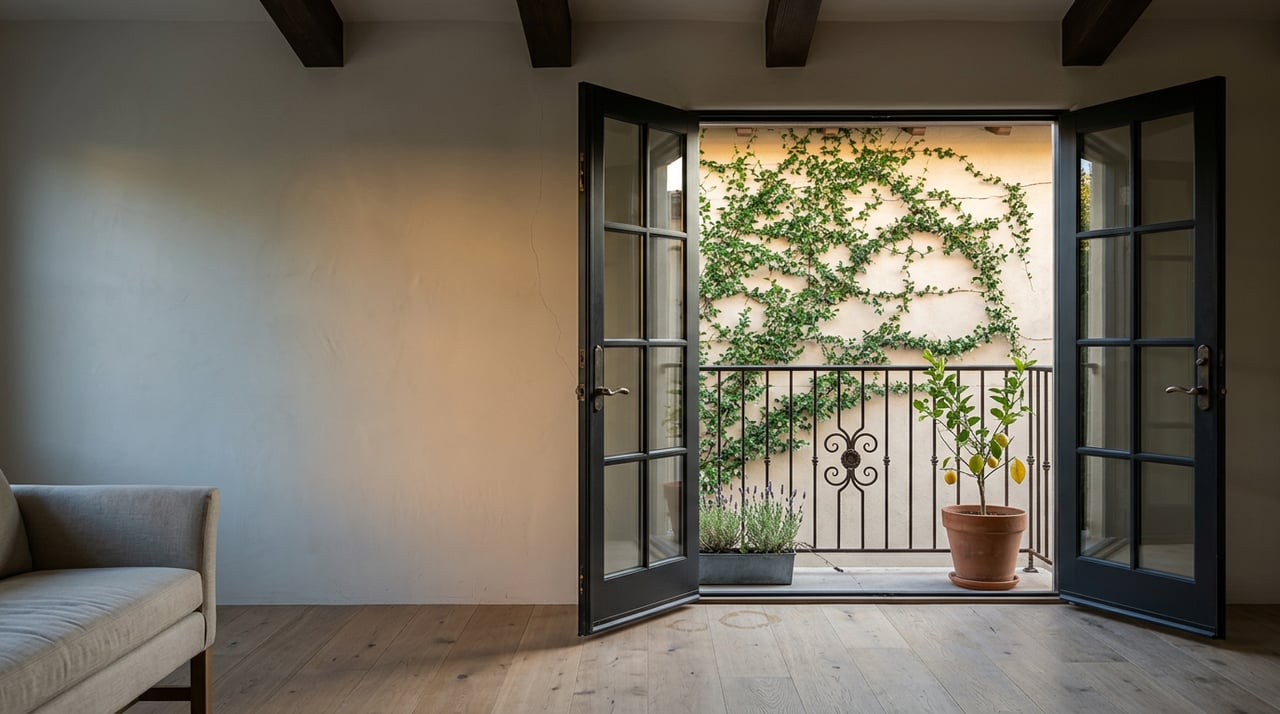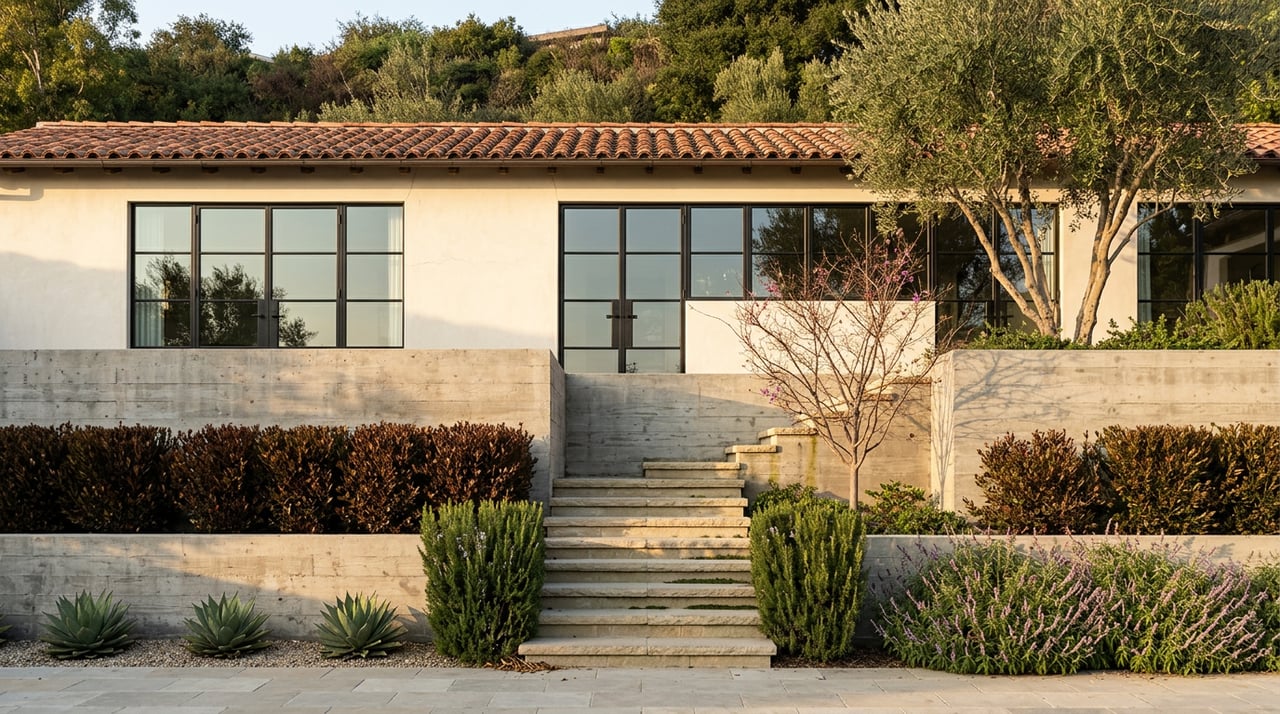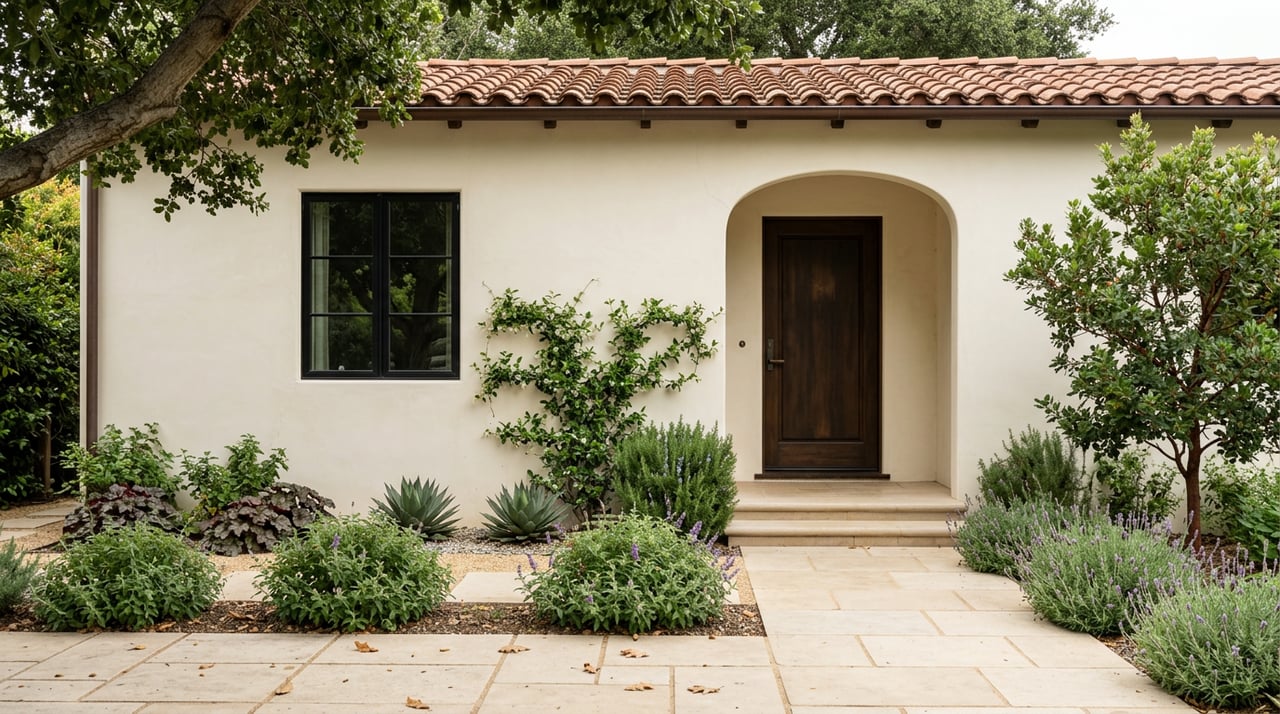
Valley Village sits inside the San Fernando Valley the way a courtyard sits inside a larger house. You can walk from a coffee counter to a half-mile mural to a park bench under a coast live oak without leaving the neighborhood's short grid, and the buildings above you rarely rise past three stories. That is not an accident of aesthetics. It is the reason your Saturday looks the way it does.
The through line of this piece is a small one. Almost everything residents love about weekends here follows from a single mid-1990s decision to cap building heights and constrain commercial scale, which locked in a walkable, low-rise pattern that other Valley pockets have since traded away.
The zoning decision that shaped your morning walk
In 1993, after years of organizing that culminated in the neighborhood's formal recognition by the Los Angeles City Council, residents ratified a set of restrictions that still govern what can be built here. New commercial buildings are held to roughly 36 feet, homes to about 30. Certain commercial uses are prohibited outright, apartment balconies are regulated, and landscape requirements were written into the code. The intent was explicit: keep the neighborhood at resident scale rather than let it fill in with towers.
The practical effect, three decades later, is that sightlines from the sidewalks are still sky and canopy rather than glass and parking podium. It is also why the small clusters of independent businesses along Magnolia and Riverside have space to exist. A neighborhood zoned for low-rise infill produces the kind of ground-floor retail you can actually walk to.
The Saturday most people settle into
Nobody who lives here needs a map. But if a friend visited and asked for the route, it would look something like this:
8:30 a.m., coffee. Aroma Coffee & Tea on Tujunga is the default. Order at the counter, take the garden.
9:30 a.m., the wall. Head to the Tujunga Wash, the flood control channel that cuts north-south through the eastern edge of the neighborhood. The concrete bank on the west side of the channel, along Coldwater Canyon Avenue between Oxnard Street and Burbank Boulevard, holds the Great Wall of Los Angeles. It is 2,754 feet long, one of the longest murals in the world, painted directly on the concrete under the direction of Judy Baca beginning in 1978. The National Park Service listed it on the National Register of Historic Places in 2017. You can walk the fence line parallel to Coldwater and read the decades as they go by, from prehistoric California through the 1950s.
Baca described the flood control wall, before the mural, as "a scar where the river once ran."
11:00 a.m., late breakfast. Rustic Spoon on Magnolia is the neighborhood's default when the counter at Aroma is too full to sit. Cash-and-carry pastry runs go to Black Rabbit Cafe.
Afternoon, the park. Valley Village Park is a picnic-and-shade park rather than a programmed one. Recreation and Parks does not issue permits for it, moonbounces and amplified sound are not allowed, and the picnic area is first come, first served. That is what makes it work on a Saturday: no reservations means no locked-out afternoons.
What is actually new in 2026
The Great Wall has been the neighborhood's cultural landmark for almost fifty years, and yet the interesting thing about it in 2026 is that it is still growing.
SPARC, the Social and Public Art Resource Center that Baca co-founded in 1976, has been working through the decades that were never painted. The 1960s through the 1990s panels are being produced in a museum-as-studio arrangement, and the completed 1970s segment, titled The 1970s: A Decade of Defiance and Dreams, was on view at the Jeffrey Deitch Gallery on North Orange Drive from February 21 through April 4, 2026, before its eventual installation on the wash. The 1980s work, focused on grassroots organizing, is in progress behind it.
For residents, that means two things. The section of the Great Wall you have been walking past for years is not the finished piece. And the plan is for the whole thing to eventually reach roughly a mile in length, with an interpretive "green bridge" designed by wHY Architecture at a budget of about $1.3 million, made in part from recycled debris pulled from the Los Angeles River. You will keep hearing about phases. It helps to know which one is which.
If the wall is not your thing, the news at least gives you something to say to visiting family other than "yes, it is a mural on a flood control channel, no, I do not know why."
A short dinner list, in order of usefulness
Not a ranking. A shortlist for the situations residents actually encounter.
- You want to sit for two hours and not think about it. GRANVILLE on Ventura, a short drive south, remains the workhorse. New American, outdoor seating, family-friendly enough that nobody watches the clock.
- Out-of-town guests, one seating, "somewhere that feels like the Valley." Rustic Spoon. It photographs well and the menu explains itself.
- You forgot to plan and it's 8 p.m. Prime Pizza or Noodle Monster. Both survive a Tuesday without complaint.
- A slow date without leaving the zip code. The Italian room on Magnolia that opens at 5 with the waitlist, if you have the patience for a 3.9-star crowd that still fills the room. It is not for everyone, which is the point.
The neighborhood does not have a marquee restaurant the way Toluca Lake or Studio City can claim one, and that is part of its texture. The dining is deep at the middle and short at the top. If you want a marquee night, cross Riverside Drive.
The traditions that anchor the calendar
Two annual events do most of the community work here.
The first is the Valley Village Fourth of July Parade and community breakfast, hosted every year and documented by Council District 2. It is the neighborhood's one reliably crowded morning, and it is the reason people who moved in during the past year finally meet their block. If you have not gone, you have not fully arrived.
The second is the Home Garden Tour, in which residents open their private gardens for viewing and a small jury names a winner. It is a quiet event by design. It exists because the zoning framework produced a lot of small, well-tended front yards, and it turns that inventory into a Saturday afternoon.
Between the two, the calendar covers most of what a resident-run neighborhood is supposed to cover: a public celebration and a private-turned-public one. Nothing about either scales into a festival, and residents seem to prefer it that way.
Why the low-rise code still matters on a Saturday
Return to the through line. The zoning framework passed in 1993 was written to protect the neighborhood from a specific outcome: mid-rise commercial infill along Magnolia and Riverside, with the parking and traffic loads that come with it. Three decades later, the payoff is not architectural. It is behavioral.
Aroma has a garden because the parcel was never worth redeveloping into something taller. The Great Wall stayed a walkable landmark because the streets around it stayed low enough to see it from. The Home Garden Tour is possible because the housing stock is mostly single-family with real front yards rather than podium apartments with landscape strips. Valley Village Park works on a first-come basis because the neighborhood never grew a population that would break the model.
None of this is preserved by inertia. It is preserved by the code, and the code is preserved by residents who show up to Neighborhood Council meetings on the fourth Wednesday of the month. The weekend you enjoy is the outcome of a policy fight most residents did not have to be part of, because someone else already had it.
That is worth knowing the next time somebody asks what is so special about a neighborhood that looks, at first glance, like the rest of the Valley. The answer is that it does not look like the rest of the Valley. It looks like what the rest of the Valley used to look like, on purpose.
If you own a home here and are thinking about what your block's low-rise character means for long-term value, or if you're curious how the Valley Village pattern compares to Studio City or Toluca Lake in an eventual move, Joan Duffy works these streets every week. Let's connect.